
Search: Affective Justice: Book Symposium: A Response
01 Aug A Few Final Thoughts and the Problem of Un-Ringing Bells…
...so rather than dwell on this point, I want to briefly segue to a larger question that has plagued me from the beginning of this debate: are we to judge proposals like those in Ben’s book in a vacuum? Or, in contrast, should we see these proposals through the lens of the many egregious missteps the Bush Administration has taken in its conduct of the fight against terrorism over the past seven years? I ask this question because right after finishing Ben’s book, I read Jane Mayer’s new book, which...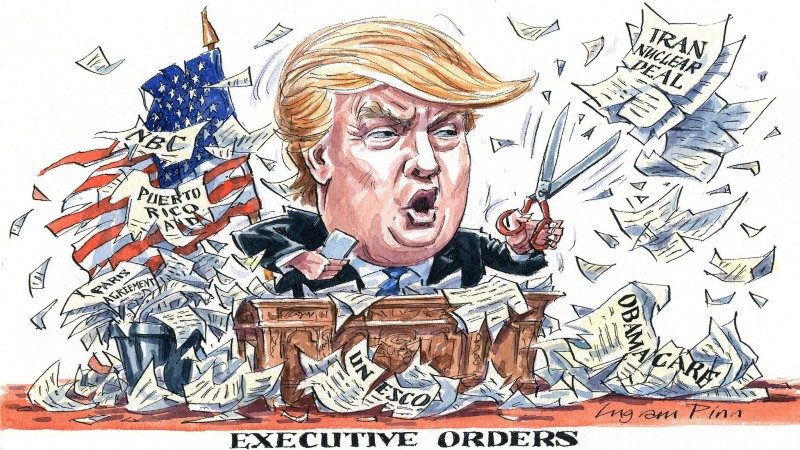
03 Oct Trump vs. International Law: Reflections on the “Scorecard,” Transnational Legal Process and the Paris Agreement
on both U.S. foreign policy and the world, but the underlying global superstructure remains mostly in place. The Trump Administration is malevolence tempered not so much by incompetence (although there is that too) as by the centrality of the international legal order to U.S. foreign policy and by a many-pronged resistance that is defending this order. For purposes of this review, I want to focus on three aspects of the book. One is Professor Koh’s discussion of the Trump Administration’s actions to date and the responses to these actions. This...11 Oct All Yoo All the Time (The Book)
Sorry to contribute to this phenomenon, but John Yoo’s new book War By Other Means: An Insider’s Account of the War on Terror is now out from Atlantic Monthly Press (not affiliated with the Atlantic Monthly, I was surprised to discover, though it’s something of an explanation), and shouldn’t go ignored. As signaled by the subtitle, this is not a book directed at an academic audience, and I’m not going to do the equivalent of a review here (I’ve collected some highlights after the jump). A couple of brief observations:...29 Sep Book Discussion: Freedom from Religion by Amos Guiora
more light than heat and so we have put together a group of thoughtful commentators to guest with us for this symposium. Joining us for this discussion are Paul Cliteur, a professor of jurisprudence at the University of Leiden and the author of the recent book The Secular Outlook: In Defense of Moral and Political Secularism (Wiley 2010), as well as Peggy’s and my colleague Mark Movsesian, the Frederick A. Whitney Professor of Contract Law st St. Johns Law School and the founding director of the Law School’s Center for...17 Oct Book Discussion Informal International Lawmaking: Legality and Normativity – A Reaction to Tai-Heng Cheng
[Ramses Wessel is Professor of the Law of the European Union and other International Organizations at the University of Twente] First of all many thanks to Prof. Tai-Heng Cheng for taking the time to respond so eloquently to the parts on legality and normativity in our book on Informal International Lawmaking. Because of his knowledge of the area (as for instance reflected in his excellent book When International Law Works), his comments are very valuable. In fact, the comments touch upon an essential debate that was started by the book,...01 Aug Plagiarism: A 19th Century Story
...work, de Pando’s posthumous book did not go unnoticed. In an extremely graceful move, Bello himself wrote a very forgiving review (see page 537), saying it is basically a “new edition” of his own book, but one that incorporated “interesting interpolations and instructive notes”. Speaking in the third person, referring to himself as “the author of the Principles”, Bello treats de Pando’s plagiarism as a showing of respect: “It is true that [de Pando] does the author of the Principles [meaning Bello] the honour of frequent citation, and sometimes in...30 Sep Book Symposium on Investment Law in International Law: Integrationist Perspectives
will introduce the book later today, followed by a general comment by Professor Laurence Boisson de Chazournes (Geneva). From tomorrow until the end of the week, the discussion will focus on specific chapters dealing with the intersection between investment law and international armed conflict, human rights, trade, sustainable development and much more! Cambridge University Press is offering our readers who wish to purchase the book a 20% discount until the end of October. To claim your discount, click here and enter the code “BaetensOJ2013”. We look forward to what promises...16 Oct Book Discussion: Informal International Lawmaking
Over the next three days we are bringing you a discussion of a brand new book, edited by Joost Pauwelyn (Graduate Institute of International and Development Studies, Geneva), Ramses Wessel (University of Twente, The Netherlands) and Jan Wouters (University of Leuven, Belgium), on Informal International Lawmaking, published by Oxford University Press. Here is the abstract provided by the publisher: Many international norms that have emerged in recent years are not set out in formal treaties. They are not concluded in formal international organizations. They frequently involve actors other than formal...08 Apr Response to Ed Whelan Regarding Koh Nomination
...Whelan must really be focused only on the specter of so-called “transnationalist” judges overturning the will of democratically elected leaders. But this concern is also without foundation. After all, when interpreting constitutional provisions, not a single sitting U.S. Supreme Court justice has taken the position that international or foreign law constitutes binding authority. As to concerns about customary international law, there are, as Whelan points out, hundreds of pages of academic debate on the precise nuances of how customary international law and federal common law interact, but the key point...